The following serves to delimit the object of the linguistic description of the language system, thus to exclude what it does not cover.
Discourse takes place in a speech situation. It actualizes elements of various systems, which are virtual rather than actual. These systems include crucially not only the language system, but also world knowledge, i.e. encyclopedic knowledge and social conventions of the speech community.
Language system and discourse
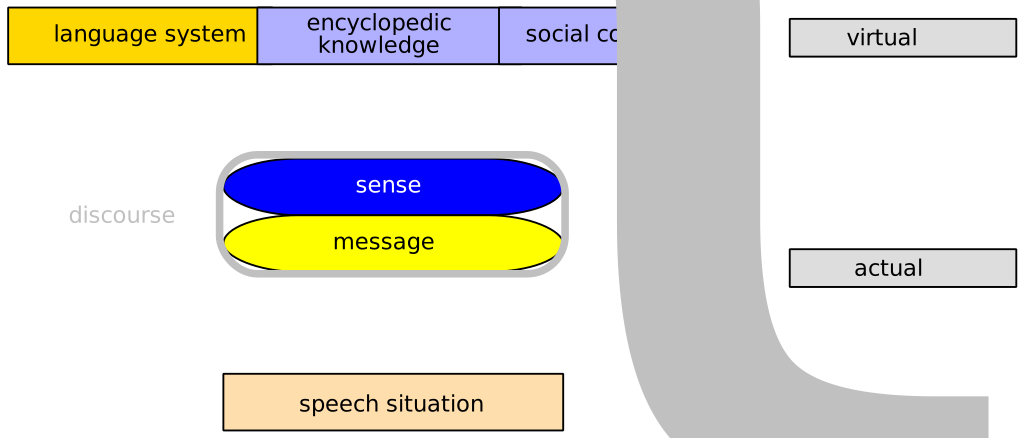
The comprehensive presentation of a language represents discourse at its level 1 and the language system at its level 2. At level 1, the presentation can describe and evoke the particular speech situation in which pieces of discourse were produced. At level 2, the speech situation remains out of consideration. Furthermore, world knowledge may be mentioned by the description if it is necessary for understanding certain examples, but cannot possibly be accounted for systematically.
The language system is composed of the sections shown at level 2 of the description, omitting here the writing system. Lexicon and grammar associate units provided by the semantics – viz. significata of signs – with units provided by the phonology – viz. significantia. The language structures cognition and communication by its semantics as it structures phonetics by its phonology.1
Structure of the language system
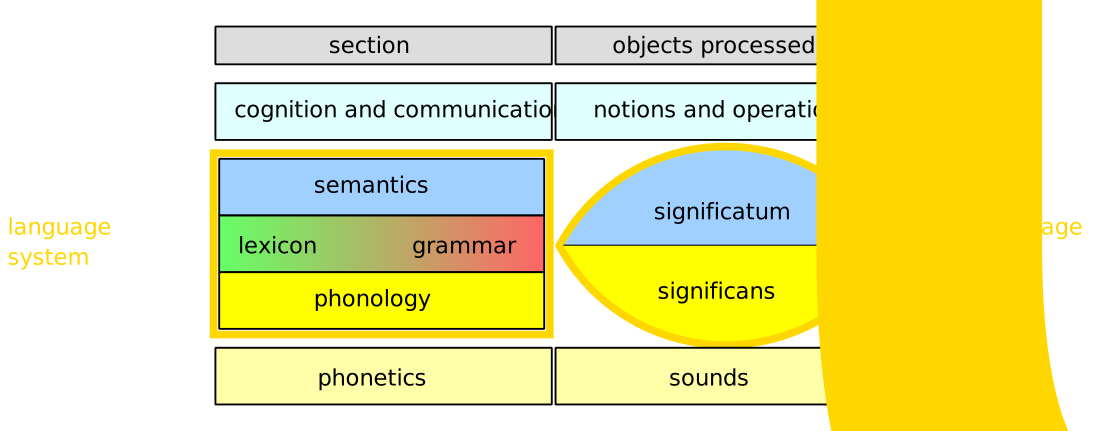
While the language system is an object of the description, cognition and communication beyond the language system are excluded. From the phonetics, only the standard phonetics as it is systematized in the phonology is included. The actual phonetics, i.e. the particular pronunciation of elements appearing at level 1 of the presentation, remains out of consideration.
1 In terms of European structuralism, semantics is the form of the substance ‘cognition and communication’, and phonology is the form of the substance ‘phonetics’.